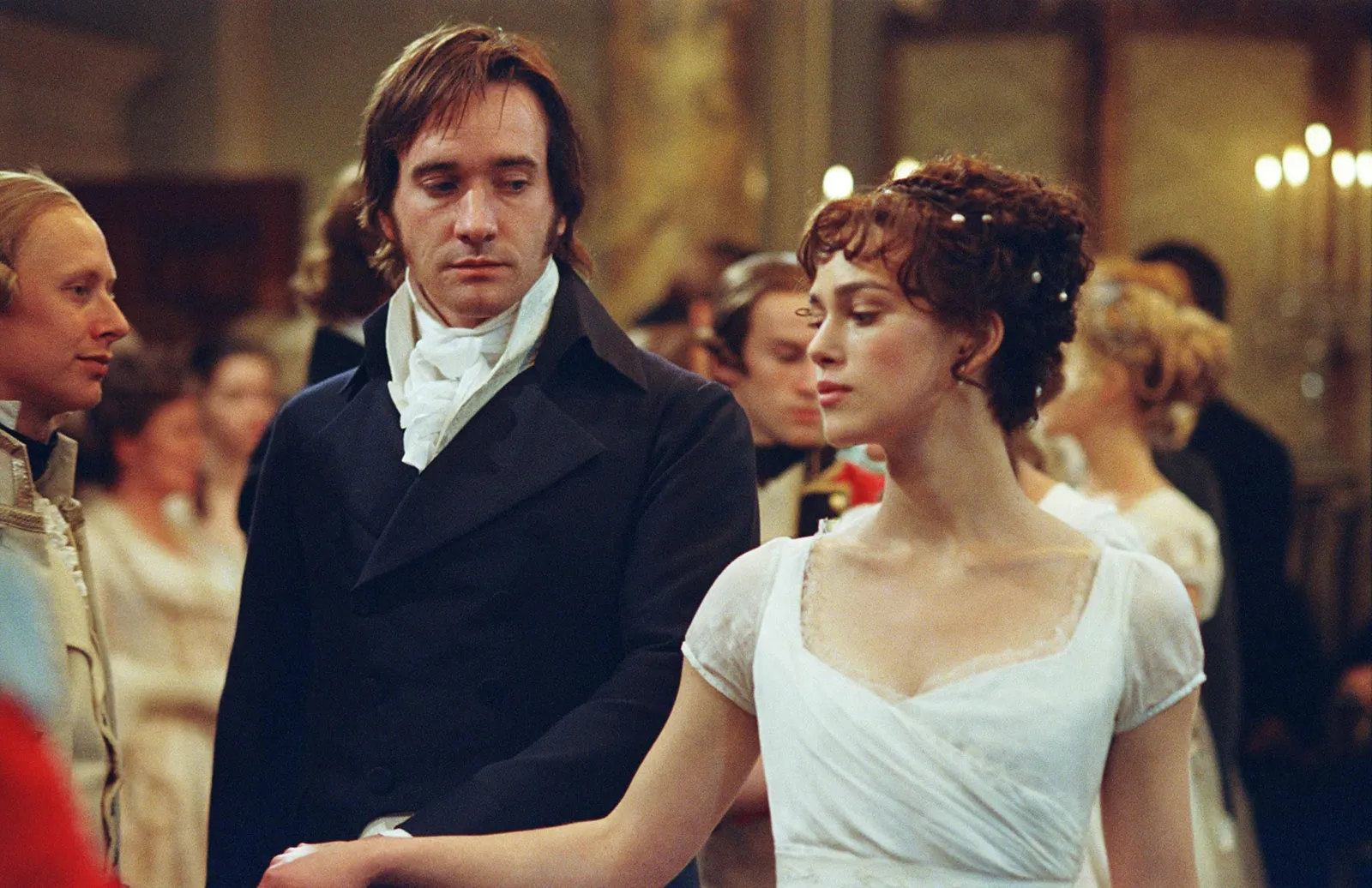
ID: Pride and Prejudice (2005). Darcy and Elizabeth dance at a formal ball, both making sideways glances at each other.
Enemies-to-lovers, ETL, or hate-to-love romance is a deliciously addictive trope in the realm of popular literature, and for good reason. It's outlandish enough to pique your interest but believable enough to make you swoon. The stakes are high, the tension is tangible, and the first sincere embrace feels like a conquered war.
And yet, why do so many books, movies, and shows featuring ETL miss the mark so miserably? If you're thinking of all the copy-paste romance novels on TikTok that primarily market themselves with buzzwords, so am I.
Thankfully, there are some professional editors, authors, and media critics who have given their educated opinions on the trope already. Here is my report compiling a few experts' articles and video essays. This outline maps out common road markers you find on the journey from enemies to lovers that shouldn't be avoided, along with a brief Not-To-Do list at the end for what to avoid. We'll go in roughly the order that these events would transpire.
The Start
Where the couple begins: Hatredtown.
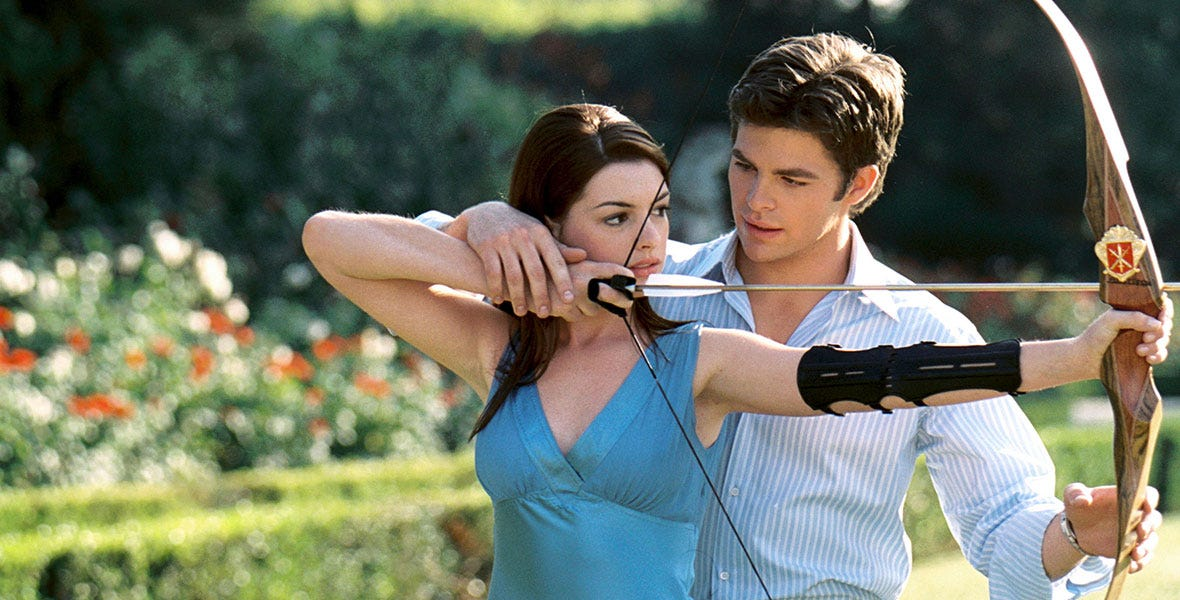
ID: The Princess Diaries (2004). Lord Nicholas helps Princess Mia with archery practice, his hands over hers.
1. Make First Impressions Matter.
When the couple meets, give it all the attention it deserves.
And then a little more.
And then more.
And more.
It could be a meet-cute that turns sour once they realize some reason for disliking each other (think Princess Diaries 2, 2004). Or, even better, it could be a meet-ugly, where they immediately get off on the wrong foot (think Pride & Prejudice). Even if it's a seemingly passing moment -- bumping shoulders on the sidewalk, making eyes across the train, or sharing a brief conversation -- do not skimp on it. Slow down and take the time to describe the moment; every little thought, feeling, and observation about the other person. Establish first impressions early on or the hate won't feel earned or realistic (Emmons). This will give the reader a clear snapshot of where the characters begin even before they form any animosity, which will then make the comparison of where they end up all the more satisfying.
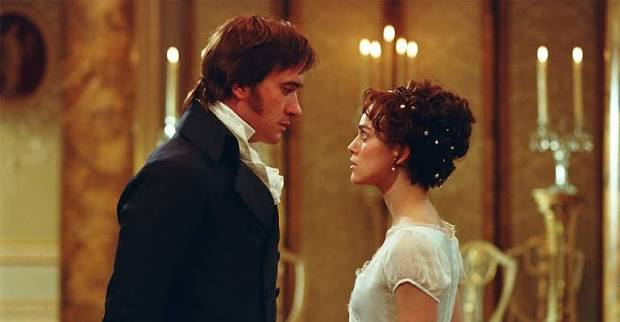
ID: Pride and Prejudice (2005). Darcy and Elizabeth glare at each other in the middle of a ballroom.
2. Make Their Hate Concrete
If there's any two things you remember from this report, let this be one of them.
Give a concrete, specific reason for why they dislike and/or misunderstand each other. Hating each other "just because" is not compelling or strong enough of a reason to base an entire romantic premise on. The reader will be slamming the book on their foreheads if the whole reason they hate each other is because he took the last muffin at the café. They'll most likely be begging "just get over it!" instead of wondering how they'll get together.
To make the core reason -- or list of reasons -- concrete, make it tie directly to the cores of who they are as people. Their personalities, values, and beliefs are attacked in some way by this person. If it's a non-contemporary genre like fantasy, sci-fi, or historical fiction, the reason could tie into their time or culture. They could be from different social castes, opposites sides of a war, or practice different types of magic.
The rule can still apply if they've already known each other before the events of the story begin. "Even if the characters have known each other since childhood, they can still hate each other due to the culmination of smaller, petty resentments" (Emmons).
Whatever the reasons are, they have to be more than just surface level. They need to be personal. Ideally, their rivalry should be due to multiple reasons instead of just one, and it aught to be a zero-sum game where the success of one depends on the failure of the other (Fraise). It's a deep, internal struggle to change your feelings toward someone so dramatically, so make the initial root cause deep and internal.
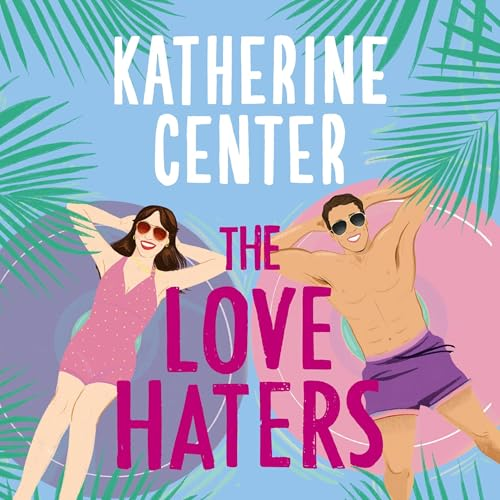
ID: The Love Haters by Katherine Center (2025). Cover art featuring Katie in a pink one-piece swimsuit and Hutch in a pair of purple swimshorts. Both wear sunglasses and lay in big innertubes with hands behind their heads.
3. They Notice Attractiveness
So, the main couple is meeting for the first time. Even though they're getting off on the wrong foot -- perhaps even despite the wrong foot -- they still notice attractive attributes about the other person that are immediately apparent. Not just height, build, and color palette; the shade of their eyes, the dimples in their cheeks, or an unconventional feature that they make look good. They don't have to be full-blown interested in each other yet. Just let them notice. This is recommended advice from those who are both experts and fans of the ETL trope. This is the Spark of Hope that ignites the reader's interest in the characters' pairing and will keep them rooting for success.
The Shift
Hatred is Point A and Love is Point C, and the shift from one to the other is the delicious minutiae that readers crack open the book for. This comprises the largest chunk of the plot.
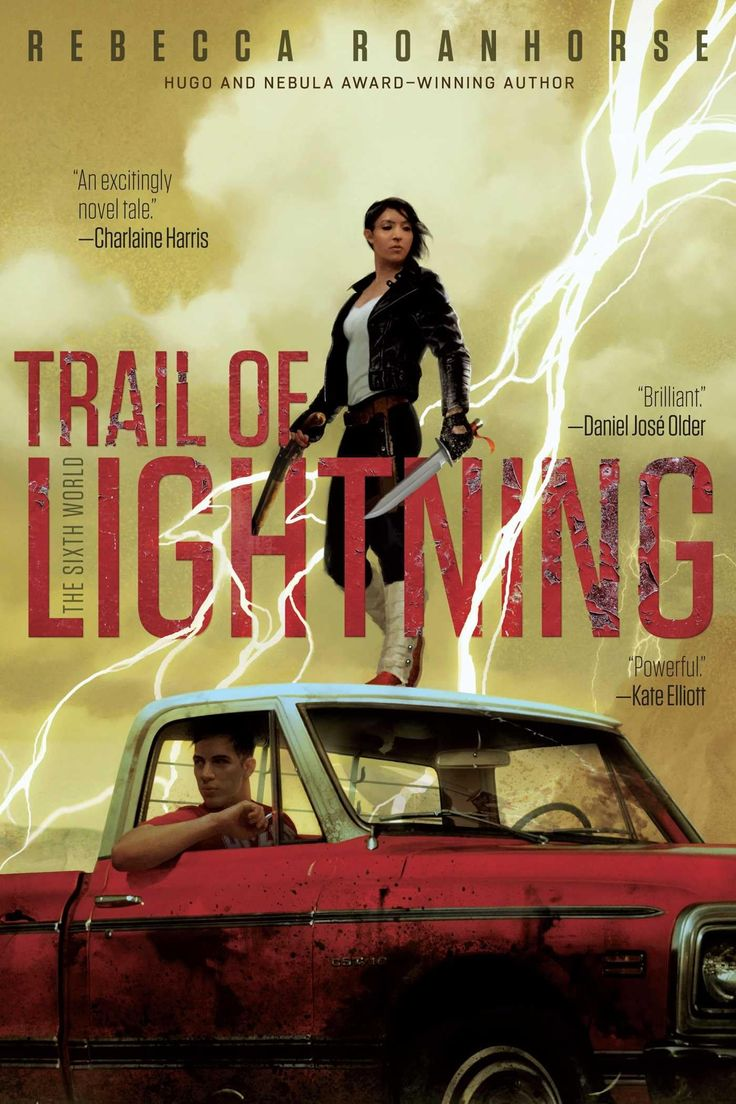
ID: Trail of Lightning by Rebecca Roanhorse (2018). Covern art depicting Maggie standing on top of a red pickup with a gun and knife in her hands as Kai looks out the window below.
4. Gradual Friendship, Vulnerability, and Trust.
The shift from enemies to lovers could be described as a gradual introduction of three vital elements: Friendship, vulnerability, trust. They can be introduced in any order, but all of them are necessary and should be earned over time and with great effort. If the FMC was the type of person to forgive easily, then the story would only be three pages / five minutes long. Hatred that turns to love too quickly and easily feels cheap and amateur, so excited writers who can force themselves to slow it down often make more appealing plots. Make it gradual.
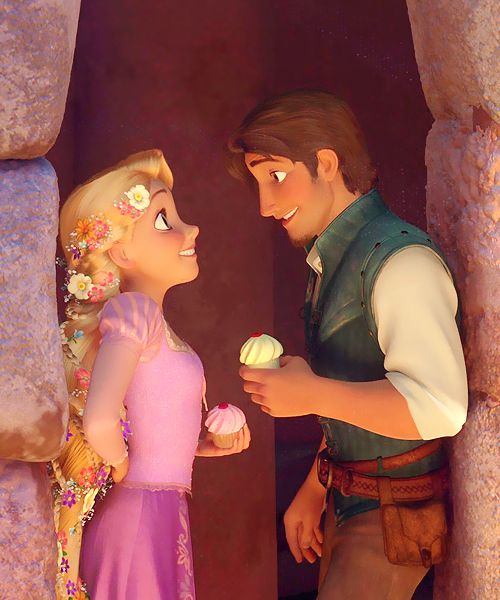
ID: Tangled (2010). Rapunzel and Flynn Rider shares smiles as they hide in a doorway with cupcakes.
5. Midpoint Friendship
This is the second big thing you must remember.
The "midpoint friendship" is when the enemies strike a tentative truce or their hatred cools off enough to reach something of an equilibrium. Maybe they're best friends now, or they made a pact to not kill each other for the next 24 hours. Whatever the situation, "there is nothing more maddening and unrealistic than an enemies to lovers romance that completely skips the midpoint friendship" (Emmons). This will be touched on more in the Not-To-Do section later, but romance that spawns directly from hatred is unfounded, unbelievable, and downright unhealthy. Moving on.
Friendship can happen thanks to finding common ground. Perhaps while being assigned to the same project, the work rivals learn they share the same music taste. Perhaps the allied assassins from warring kingdoms realize they share similar childhood traumas. It's basic psychology that people find others similar to them as more trustworthy and likeable, so don't be afraid to explore it. It works in real life, so readers will empathize.
This shift into friendship shouldn't just be internal; make it apparent by their behavior towards each other. Lightening up on insults, remembering a favorite coffee order, or volunteering to take first watch are some examples. Are Moreci points out, bickering that turns into banter is especially juicy to read. Going from pointed barbs to playful teasing displays their platonic shift in a grounded way.
An important note here to remember: Make sure that the characters' personalities don't switch-up halfway through (Fraise). The characters should be befriending each other thanks to uncovering previously unknown aspects of their personalities, lives, or motives. This revelation should feel more like filling in gaps, peeling back layers, or reframing previous assumptions, not a complete 180 degree turn around. An example I can think of was a manuscript where the FMC was awkward and the MMC was grumpy. But then, halfway through the plot, a defining conversation occurs and, uncharacteristically, she's the one doing the direct confrontation and he's the one keeping the peace. Instead of coming across like we're learning something new about the characters, it feels like they're behaving that way simply because the plot necessitates it. If her directness and his calmness were hinted at much sooner, then it wouldn't seem like they swapped personalities.
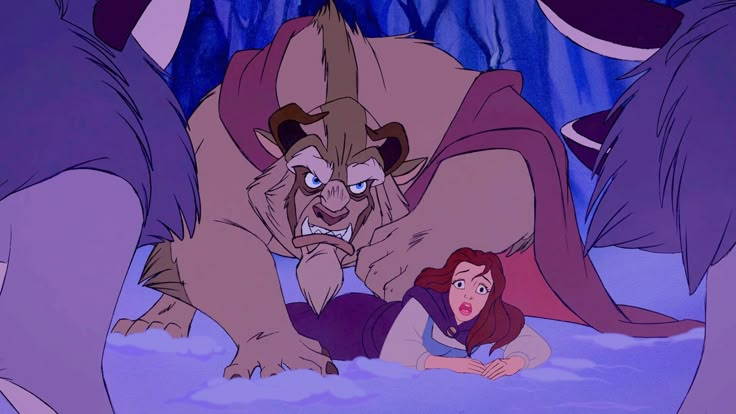
ID: Scene image from Beauty and The Beast (1991). Beast guards Belle from a pack of wolves.
6. Situations That Confront Misassumptions
Next, vulnerability and trust can be established by making the characters go through situations that cause them to reconsider and confront their misassumptions about themselves, each other, or the beliefs that divided them in the first place. Few obstacles are as troubling as a paradigm shift, am I right?
The forced proximity trope and ETL trope go together like peanut butter and jelly. ETL can exist without it, but if you choose to go for it, make it a proximity wherein they must problem-solve together (Emmons). Getting kidnapped to a fey prince's castle is all well and good, but working together serves far better to pressure-cook the romance than merely co-existing as roommates. Perhaps while searching the catacombs, the prince is scared of the dark and the maiden is scared of rats, so they have to encourage one another, breaking the seal of personal vulnerability and establishing trust.
Once the couple has vulnerability and trust, respect follows, as surely as arithmetic. "The key word here is respect" (Moreci). It's nice when the characters start to soften around each other, but an effective means of actually getting there "is a moment where respect is proven and earned. The characters learn something about one another, or witness an event that disproves their negative opinions of them. ... Thus, this moment plants the first of many necessary seeds in order to establish a future romantic relationship" (Moreci). Don't just let it be one singular moment either; let them add up over the course of the story. Vulnerability and trust shift the couple from enemies to friends, but respect is the initial shift from friends to lovers.
The Continuation
So, the couple has been through some transformative experiences, are now benefitting from a well-earned friendship, and are now starting to feel feelings for each other beyond friendship. Yay!
Right?
No.
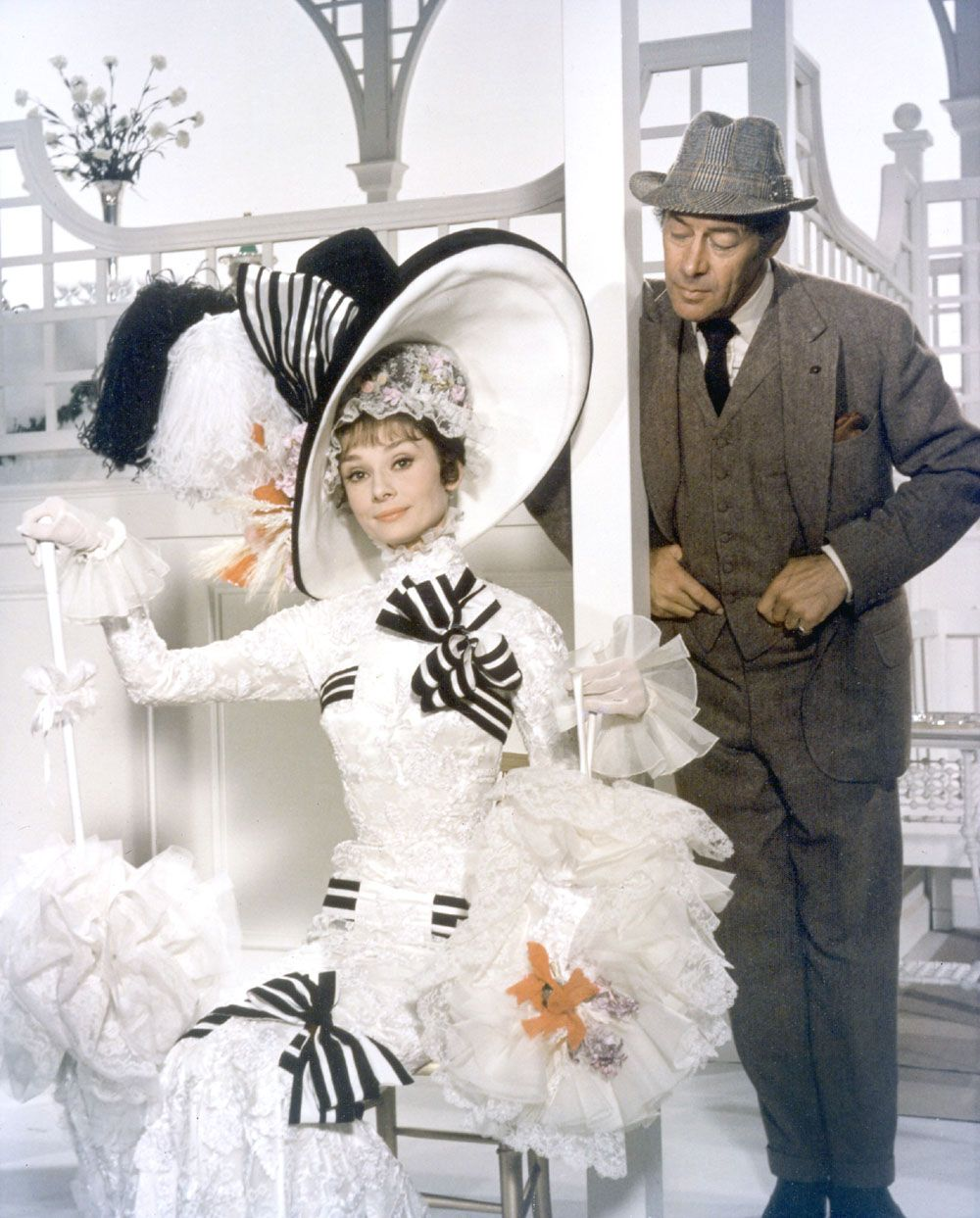
ID: My Fair Lady (1964). Henry Higgins sneaks a look at Eliza Doolittle, who is all dolled up in flouncy black and white clothes.
7. They Fight Their Feelings
A quick way to make ETL lose the readers' interest is for one or both characters to immediately recognize their feelings and embrace them. It strays into unrealistic territory because, as stated before, it takes a lot of processing to untangle such an internal problem. They need to resist their attraction, fight their feelings, and refuse to admit them to themselves first (Moreci). It's always deliciously funny when they try to explain away their feelings and then, to their utter horror, think "Ew! Get it off!" (Emmons) There is too much history between the characters to make this second shift easy, so let them struggle.
Jealousy is one common tactic ETL authors use to get their characters to realize their feelings. Abbie Emmons describes its effectiveness as such:
Remember, jealousy can come in many different forms. Sometimes characters get jealous because of what they think is true but isn't actually true. Sometimes there is no "other character" who sparks the jealousy; maybe it's just the idea of Character A moving away from Character B, or switching schools or switching jobs, or just not being as present in their life anymore. Lots of things can make us feel the loss of someone. And that feeling of "oh my God, I can't lose them" -- that's the magic ingredient we're looking for.
If you choose to use jealousy to help your characters come to their senses, make it more than mere possessiveness and relate it back to what made them friends in the first place.
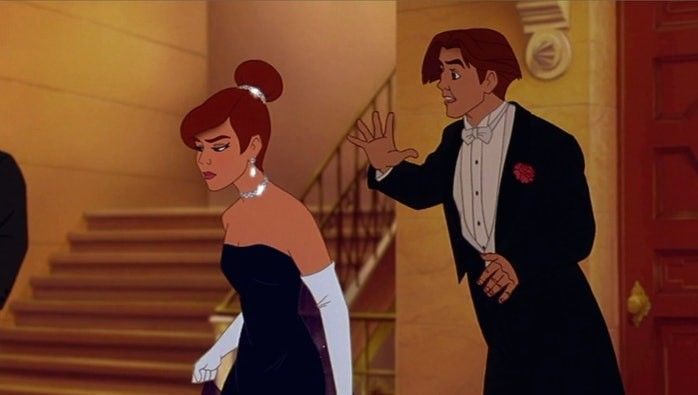
ID: Anastasia (1997). Dimitri follows after Anastasia at the opera, trying to explain himself.
8. They Fight to Confess
But before the couple can confess their feelings, to themselves or each other, a few more pitfalls need to occur. If they're struggling to admit their feelings, only something big could make them, even if that is exactly the worst thing they could do in that situation. If they confess with no consequences, then the story is essentially over. But if there are obstacles -- new, old, and ongoing -- that keep them apart, the reader will stay hooked (Emmons). After finally getting real or intimate with each other, dial up what made them rivals in the first place. Whether it's the plot, their personalities, or outside forces, they get worse in catastrophic ways (Moreci). Ideally, the budding relationship should be threatened by more than one type of conflict. Getting assaulted on multiple fronts will keep the reader guessing how the couple will end up together (Emmons). And just to clarify, all of the experts I've researched have mentioned nothing about miscommunication counting as conflict, so it can, and should, be resisted.
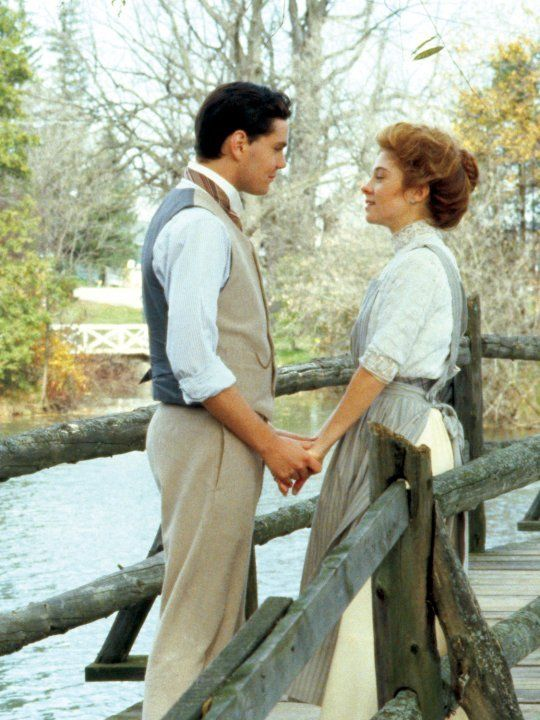
ID: Anne of Avonlea (1987). Anne Shirley and Gilbert Blythe hold hands and resonant eye contact on a bridge.
9. Their History Forms a Foundation
The characters have overcome their obstacles and confessed their love! But it can't be all sunshine and rainbows just yet. Look back at the status of the individuals across the story and consider how strong they are as characters. The strength of a story is related to the strength of the characters. The same is true for the arc; the satisfaction of the romantic arc is related to the character arcs. Their relationship status changes, but so should they as individuals. Ask yourself, if they didn't end up together, would they be any different from how they started out? If the answer is no, then their arcs need work. "Happily Ever After can't come until the characters have changed. Hence the importance of making them multi-dimensional" (Fraise). Having detailed, meaningful character transformation will provide the relationship with a rich history. This history, though once steeped in hatred, competition, and awkwardness, is exactly the foundation it will need to thrive as a promising happily ever after (Emmons). Better than love at first sight, this couple has already seen the worst in each other, survived hell, and come out stronger together.
Not-To-Do List
The ETL trope can flop more easily than it can fly, so let's dig into some things experts dissuade.
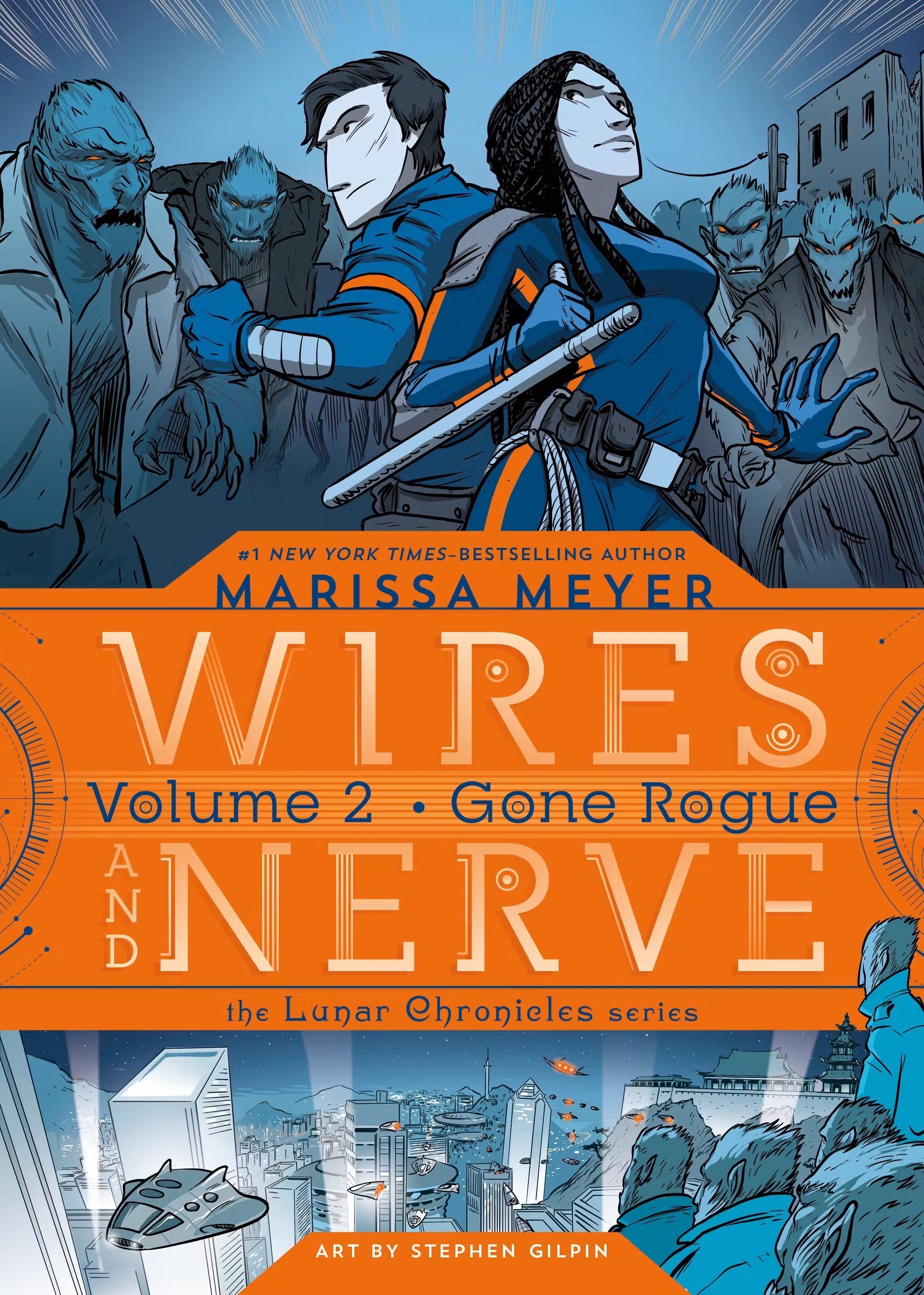
ID: Wires & Nerve Vol 2 : Gone Rogue by Marissa Meyer (2018). Iko the android and Liam Kinney the royal guard stand back-to-back in a pack of wolf soldiers.
A. Make Them Enemies, not Unlikeable
Make them enemies, but not unlikeable (Moreci). In an attempt at making the characters hate each other, writers can end up making readers hate them too. True, it's ultimately up to the reader if they like or dislike a character, but there are things writers can avoid to keep that number to a minimum.
A particularly stark example I can recall was a manuscript I read where the FMC was kidnapped by the MMC. She was rightfully terrified and he was thoroughly amused. It seemed that the author's end goal was to create a twist where the FMC realized that she was just being a spoiled princess while he was the only man who could appreciate the true her. Unfortunately, I found it impossible to root for their relationship when he offered no transparency or reassurance, just smugness and entitlement. I empathized with the FMC's plight, so the twist felt like a sprain.
The character may be blinded by their hatred for the other person, but the reader should not be. The reader should be able to at least sense that the character being judgmental is as flawed as the one being judged, and that the character being judged is as sympathetic as the one being judgmental. If anything, the reader should like the enemy long before the character does. It may be hate at first sight for the protagonist, but it aught to be more like love at first sight for the readers.
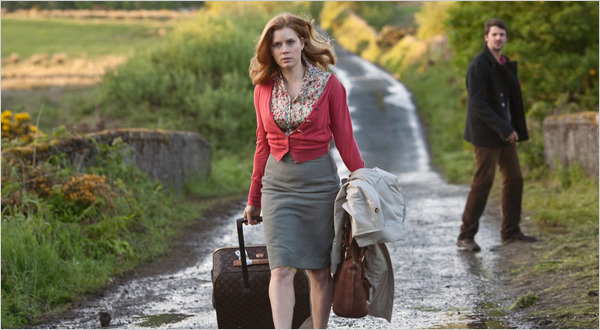
ID: Leap Year (2010). Declan follows / escorts a frustrated Anna as she hauls her suitcase up a long Ireland road.
B. Don't Resort to Bullying to Create Enemies
Let's go back to when the characters meet and their rivalry is introduced. Do not use abuse to make them enemies. They don't have to "get along in the beginning of the story, and they certainly won’t be instant best friends, but they don’t have to resort to bullying or drama to be considered enemies to lovers" (Bauman). If the jock cruelly picks on the nerd, how would the nerd ever realize that it's a cover for a crush, and why would she ever desire to reciprocate? This ties into the advice of giving their hatred a concrete base. Bullying doesn't always stem from ideological or personal differences and it doesn't always have a reason; some people are just mean for the fun of it. Thus, bringing abuse into the relationship is an ineffective and vague foundation for ETL, other than the obvious fact that abuse turns a lot of readers off. Avoid crossing that line because it's very difficult (if not impossible) to bring readers back from it (Moreci).
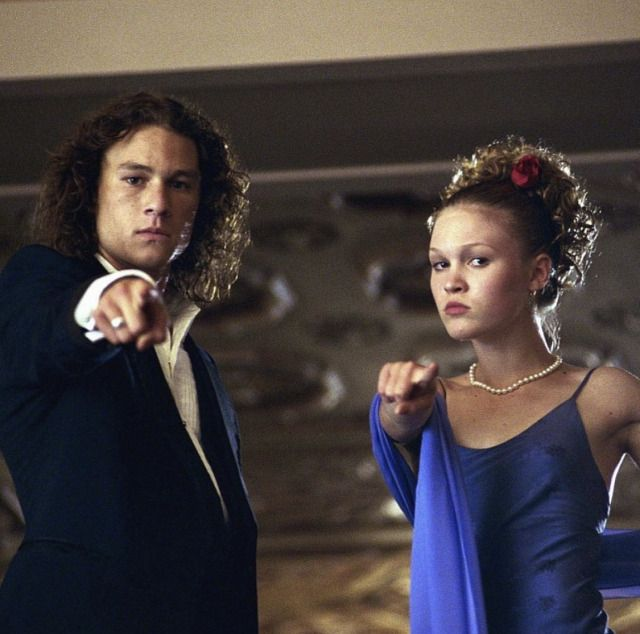
ID: 10 Things I Hate About You (1999). Patrick and Kat point at the viewer in prom attire and serious expressions.
C. Don't Resort to Manipulation to Create Friends
As Hannah Bauman puts it, "enemies to lovers is a catchy way of saying your characters have to overcome their differences / misconceptions." So, while there may be a physical antagonist thwarting the couple, they also face hurdles within themselves and between each other. These hurdles cannot be overcome through manipulation, deceit, trickery, or lovebombing. Even if one or both characters are playing a lie for plot reasons, that lie cannot be the reason they're able to become friends. If anything, the friendship should grow for other reasons and the lie should be what constantly puts their friendship in jeopardy. A friendship built on selfish manipulation is not friendship (in real life or fiction), thus there will be nothing to springboard them into lover territory. Overall, an ineffective method to shift them.
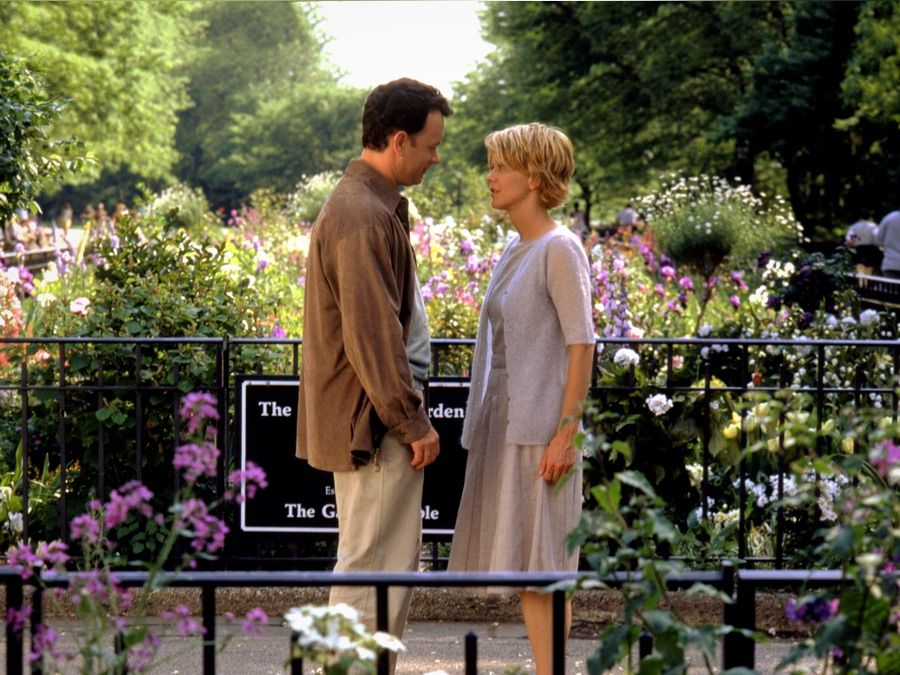
ID: You've Got Mail (1998). Joe Fox and Kathleen Kelly stand in a Central Park garden, surrounded by flowers.
D. Don't Resort to Force to Become Lovers
Lastly, unity, not force, should be the defining trait of their enduring romance. If the couple shoves down their rivalry or friendship because outside influences are forcing them together, readers can tell that they're getting together simply because the author dictates it. If impossible choices, or even one of the leads forcing the other's hand, is what ultimately forces them to become a couple, the love will be unbelievable because they didn't really choose one another through vulnerability and trust. The couple has been through too much to end up as an item and still distrust one another. There should be zero lingering effects from their animosity, aside from playful teasing and inside jokes. "They can't just be sleeping together while still hating each other" (Moreci). As I pointed out earlier, their history should serve as a good foundation for their relationship, not leaving readers worrying if they'll become enemies again. This would be especially effective for one-shot novels (à la Katherine Center), but it can also make for a satisfying final conclusion to a series if the previous installations ended with an unsteady partnership for ongoing plot reasons.
References
Abbie Emmons.
Claire Fraise. "How to Write ENEMIES-TO-LOVERS Romance -- Structure, Tips, and Things to Avoid" 2026. https://youtu.be/jXwwkyBc1gE?si=sUfCH3T-U0caV7UC
Add comment
Comments